GAMES BY CATEGORY
Jigsaw Puzzles
Find jigsaw puzzle game reviews and recommendations with practical OT-friendly notes—what skills they support, what to watch for, and easy ways to grade the challenge.
WHY JIGSAWS
What jigsaw puzzles build (and why it matters)
HOW TO CHOOSE
A quick guide to picking the right puzzle
Use these cues to match challenge level to your learner—at home, in the classroom, or in therapy.
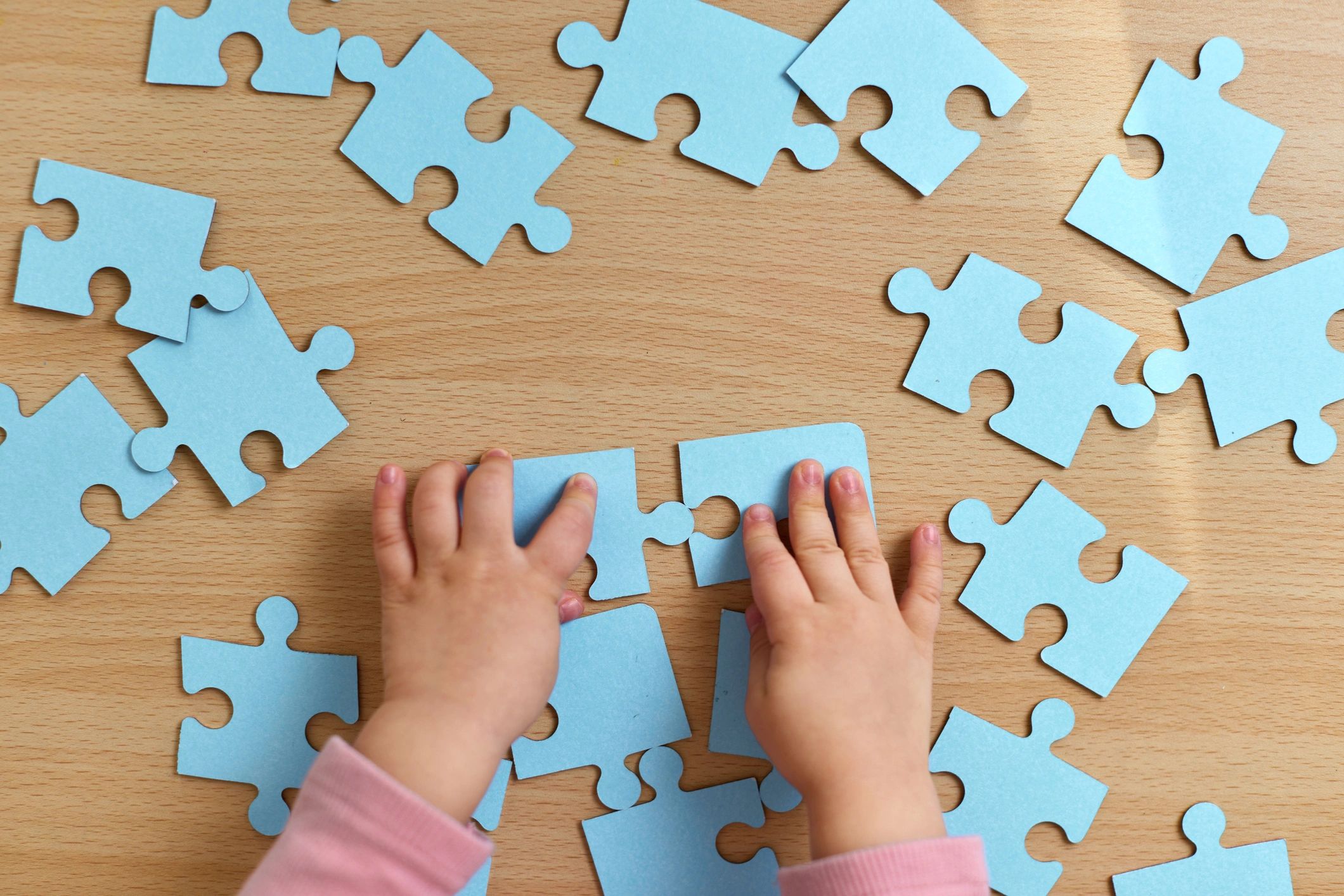
Start with the “just-right” piece count
Fewer, larger pieces support early success. Increase piece count gradually once the child can complete the puzzle with minimal help.
Look for strong visual anchors
Clear borders, high-contrast images, and distinct colors make it easier to find matches and reduce visual overload.
Choose piece style that fits the goal
Knob puzzles and chunky pieces support grasp and placement; traditional interlocking pieces add rotation and precision demands.
Plan your supports (then fade them)
Try sorting edges first, using a reference picture, or covering extra pieces. Reduce prompts as confidence builds.
Puzzle play in action
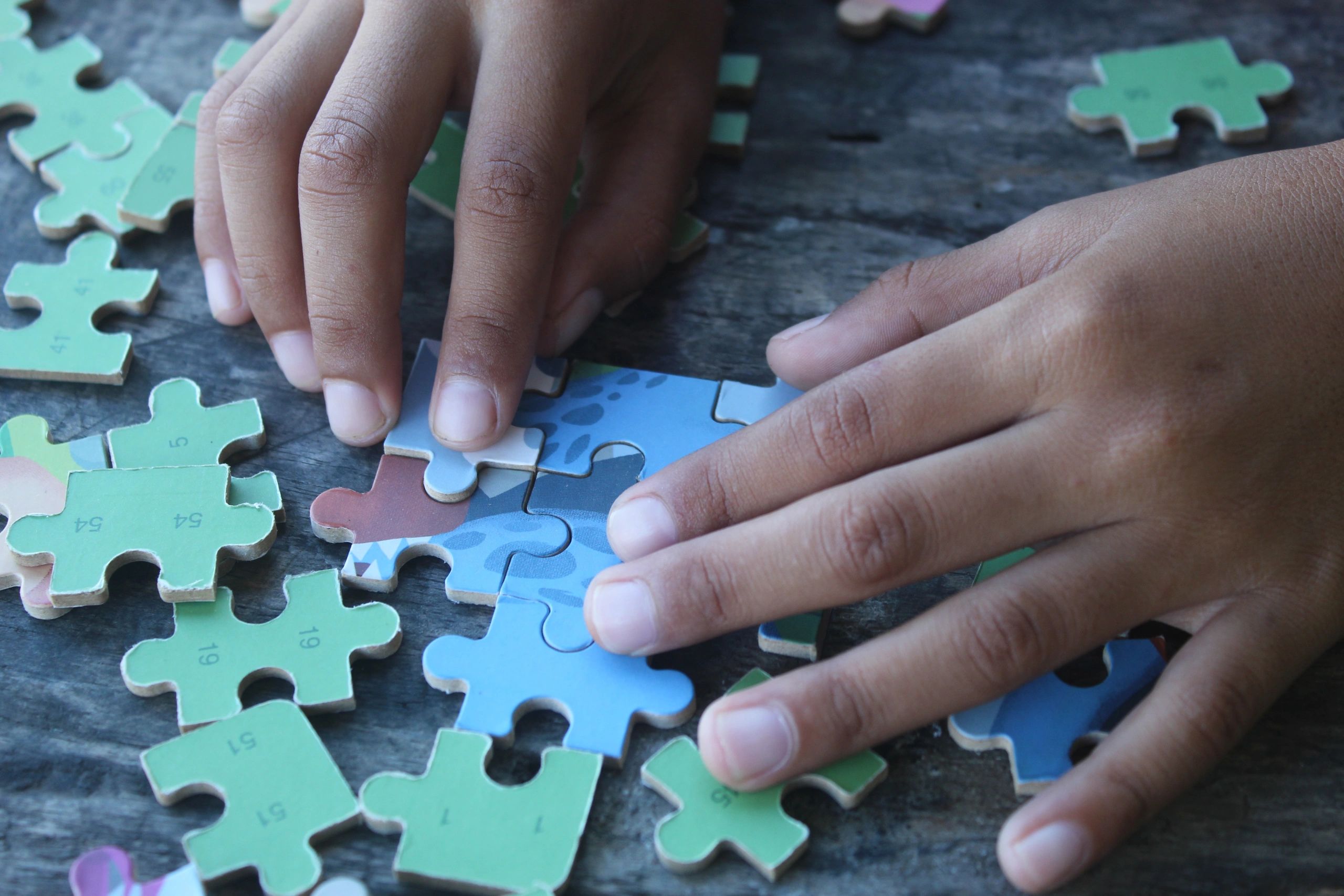
A few visual ideas for how puzzle time can look across ages and settings—tabletop, floor play, and quick “brain break” builds.
Jigsaw puzzle FAQs
Common questions I consider when recommending puzzles for kids, classrooms, and OT sessions.
What age is a jigsaw puzzle “appropriate” for?
Age ranges are a starting point, but the best fit depends on piece size, image clarity, and how much support the child needs. Aim for success with a little stretch—not constant rescue.
How do I grade a puzzle up or down?
Grade down by sorting pieces, starting with edges, using a frame tray, or covering extra pieces. Grade up by increasing piece count, removing the reference picture, or timing a “beat your score” replay.
What if my child gets frustrated quickly?
Use shorter sessions, pick puzzles with clear anchors, and build a routine (edges → corners → color groups). Celebrate effort, not speed, and stop while it still feels doable.
Are puzzles good for visual-motor integration?
Yes—kids coordinate what they see with precise hand movements, rotation, and placement. It’s a natural way to practice visual-motor skills without worksheets.
Do puzzles help with attention?
They can, especially when the puzzle is at the right level. The clear goal and immediate feedback support sustained attention and “stick with it” behavior.
What’s a simple way to make puzzle time more social?
Try a “piece pass” rule (find a piece for a partner), assign roles (edge finder, sorter, builder), or do a cooperative puzzle where everyone works on one shared picture.